







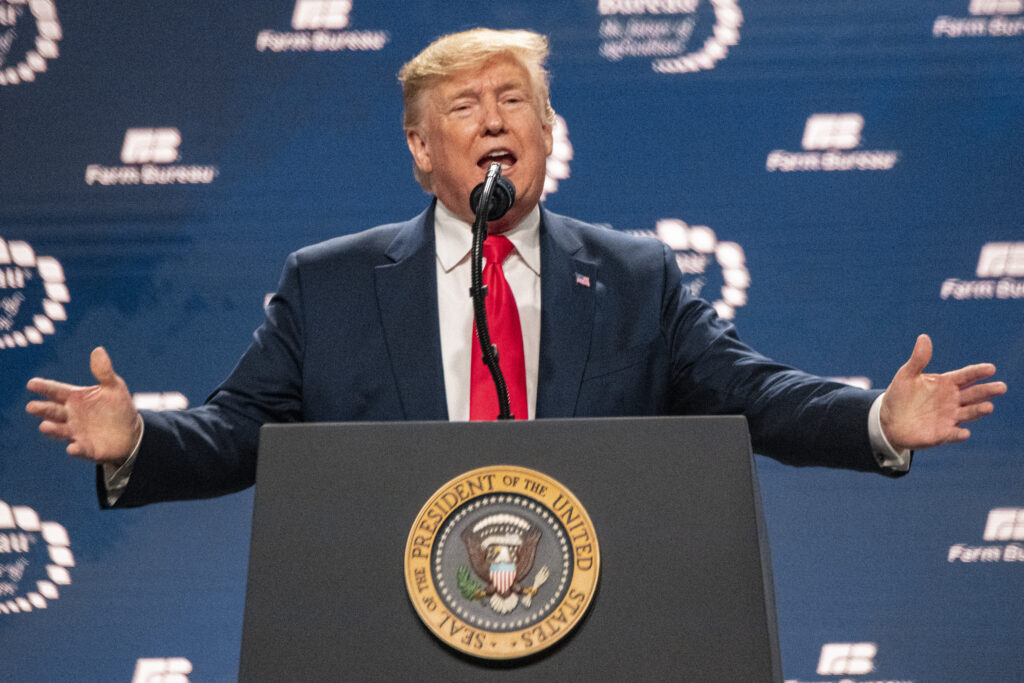
On January 7, President Donald Trump announced that the United States would withdraw from the United Nations Framework Convention on Climate Change (UNFCCC) and the Intergovernmental Panel on Climate Change (IPCC). The move, which marks a historic rupture in global environmental diplomacy, is part of a sweeping plan to quit 66 international organizations and agreements. It has sparked outrage among scientists, diplomats and human rights advocates, who fear a major setback for global climate governance at a time when action is more urgent than ever.
A decision that breaks with three decades of multilateralism
According to a White House memorandum signed on January 7, 2026, Washington will begin procedures to leave around 60 organizations, conventions, and international treaties, roughly half of which are linked to the United Nations. Beyond the already confirmed departure from the Paris Agreement, effective January 20, this decision targets the institutions that have coordinated scientific collaboration and climate transparency for more than 30 years. Legal and procedural hurdles remain for several of these withdrawals, but the political message is clear: the United States is turning its back on multilateral climate diplomacy.
The Trump administration argues that these bodies “no longer serve American interests” and promote “ineffective” or “globalist” policies that undermine national sovereignty. Officials say the move will end the alleged “misappropriation” of U.S. funds to support “biased” international agendas considered hostile to the country’s economic priorities.
A geopolitical rupture that could have serious consequences
Many analysts see the withdrawal from the UNFCCC as far more consequential than leaving the Paris Agreement alone. It could exclude Washington from future negotiations on carbon markets, adaptation financing, and transparency rules, discussions in which the U.S. has traditionally played a vital role. Losing American participation, they warn, will deprive the international community of a key driver of innovation, technology, and finance at a time when developing countries urgently need support.
Some experts have gone as far as calling the move a “strategic blunder” that takes the United States “out of the arena” for years. Rejoining the UNFCCC could be politically difficult, as several legal scholars believe it would require a two-thirds Senate majority, a near-impossible feat in a deeply polarized Washington. The decision also risks emboldening other governments tempted by nationalist or isolationist approaches to climate policy.
Scientists and human rights advocates are sounding the alarm
Reactions from environmental and human rights organizations have been swift and severe. NGOs including Human Rights Watch denounced the decision as a “new low” and a betrayal of those most vulnerable to the impacts of climate change. They warn that it will weaken global efforts to curb emissions and endanger basic rights such as health, access to clean water and food, and the right to a safe environment.
Experts underline that climate and human rights challenges are intertwined. Communities living near polluting industries, in coastal regions, or in drought-prone areas will be the first to feel the consequences of this political retreat. As several NGO networks point out, abandoning scientific cooperation does not stop global warming; it only weakens the systems designed to prevent misinformation and gives fossil-fuel interests greater room to maneuver at the expense of vulnerable populations.


